How to Set Up Fresh Plant Cuttings for Your Vivarium or Terrarium
So you find yourself with some sliced up philodendrons gifted by your local dart frog hobbyist in the standard green plastic sandwich bag with some paper towels, where do you go from here?
Cuttings are the easiest way to share plants with local hobbyists or even to sell to help support your hobby. I often sell cuttings of my vivarium plants to my followers on Instagram or through Facebook marketplace and occasionally hear people struggle with success after receiving new cuttings. Once you understand some basic parameters and get the hang of it, raising cuttings is easy and rewarding. There are some key steps to consider when receiving and tropical plant cuttings: the species, substrate, and environment.
Background
Each tropical plant, while hailing from similar environments, have unique care needs which need to be fulfilled to ensure success. When you receive plants from hobbyists it is always a good idea to ask how they personally keep the plant and learn from their success. Ask about the substrate, lights, and misting schedule of the seller’s set up to get a good idea about how to start your cutting. Different types of plants may need specific care requirements, for example, some more delicate plants like species of begonias really dislike water on their leaves and will often drop leaves if heavily misted, while other epiphytic plants may need to dry out slightly between misting. Although there are some intricacies between species there are some surefire ways to set up your cutting for success.
Quarantine, Sterilization, and Preventing Pests
Before we dive into how to set up your new cuttings, there is an important matter of avoiding pests. I always like to quarantine and sterilize my plant cutting before planting it in a propagation box. Although many hobbyists often forgo this step and plant their new cuttings directly in their vivarium, quarantine and sterilization are key steps to prevent potential diseases and pests from showing up in your vivarium. Even just removing old soil and submerging your plants in a simple soak of fresh water and washing with dish soap is better than just introducing a plant with no sanitation or prep.
You should always rinse and remove the substrate from your plants prior to introducing your new plants into a system with existing plants. Here are some additional effective options to sanitize your plants:
- Use a plant safe such as castile soap and rinse thoroughly, this will remove pests and potential pesticides
- Soaking your plants in 5-10% bleach for 10-15 minutes, rinse thoroughly
- Soaking plants in hydrogen peroxide for 10 min (better for sensitive plants)
- Rinsing your plant thoroughly and quarantining for 3 months
(SAFETY TIP – NEVER USE SPLASHLESS BLEACH – it is toxic to animals)
My go to procedure was rinsing plants in freshwater and soaking for 5-10 min, soaking in either bleach or hydrogen peroxide, rinsing thoroughly and then quarantining in a propagation bin for 1-3 months. I have seen some damage with prolonged bleach dips especially to more sensitive plants and am opting for a shorter dip or using soap instead. I have used bleach extensively, however, after reading this article by Verdant Vivarium, experiencing damage to some plants, and having some pests come through in one of my new vivariums (snails) I am starting to rethink my broad use of bleach.
Preparing and Planting Your Propagations or Plant Cuttings: Selecting a Substrate
There are so many options on how to plant your cuttings and just as many different substrates. My favorite way to plant cuttings is in a propagation bin (plastic shoe box, sterile container, bin) with sphagnum moss or ABG mix under a LED T5 light. Usually, you do not need any ventilation and rarely have to mist the plants. This is a really good way to start smaller cuttings, quarantine plants, and grow out smaller cuttings. I find the propagation bins are pretty foolproof and the high humidity make it easy for terrarium plants to establish. I fall back on this method whenever I get a new species or a more delicate plant. For plants which are more terrestrial or needing more nutrients I will use a chunky mix of peat moss, worm casting, perlite, sphagnum, and orchid bark. I’ve recently transitioned from using solely sphagnum moss to this mix especially for my aroids and other plants.
| Sphagnum | Easiest for plants to root in | Not the best growth |
| Soil Mix/ ABG | Relatively easy for plants to root in | Higher nutrients |
| Water | Works for some plants like aroids | Low maintenance |
While sphagnum moss is a great way to get plants started using a soil mix is the best way to have a plant really take off if you are growing a cutting. Additionally, I like to use a diluted aquarium safe fertilizer like Seachem Flourish to provider some additional nutrients. I’ve also heard other hobbyists using more specialized hydroponic fertilizer with success.
How to Plant Propagated Cuttings in Your Vivarium or Terrarium
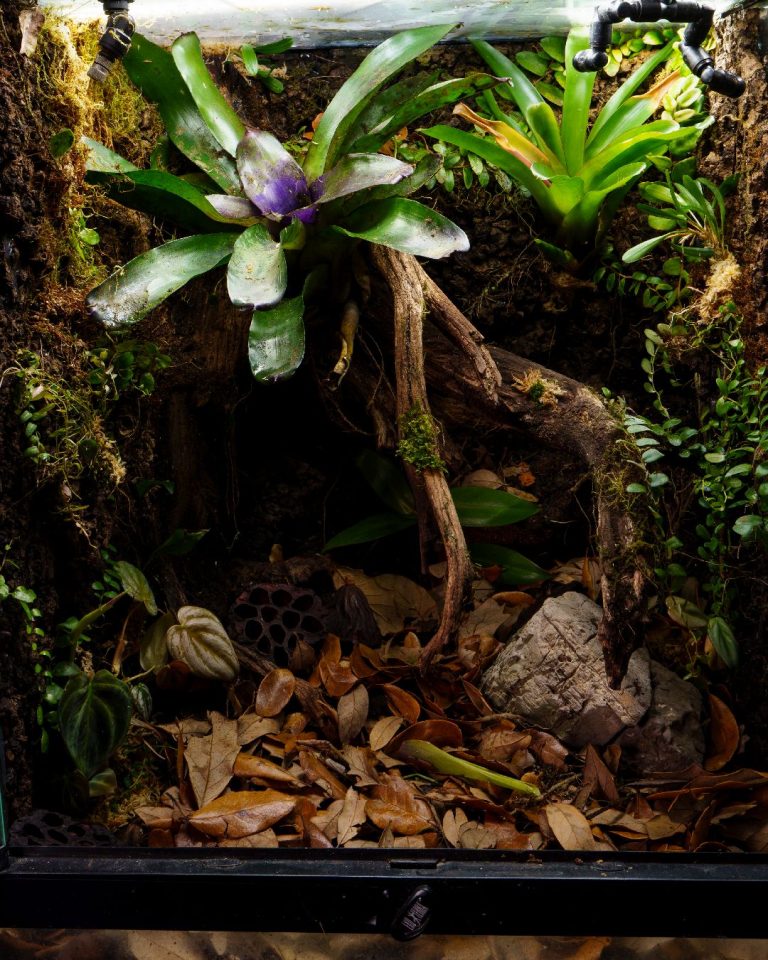
Once you finish preparing your plant, you can also plant your cutting directly into your vivarium. I like to experiment with different places to put a vivarium plant and often move the cutting around to see where it can establish. It is important to plan for the growth of the plant otherwise you may have an overgrown specimen that fills up your whole vivarium. I also like to prop up new cuttings around the outside perimeter of the vivarium. Plants like aroids, marcgravia, and peperomia, will climb if given the chance and tend to grow better with support.
I tend to favor toothpicks when planting my vivarium. I find I’m able to pin small chunks of sphagnum to give the plant a head start or so I can keep the established roots from my propagation bins. Other hobbyists have had success use stainless steel wires or floral pins.
After fixing the plants to the background, It is crucial to make sure the plant stays well-watered. In some cases, I’ll even hand mist on top of my automatic misting system. The biggest variable in success is ensuring your plant stays moist and does not dry out in your vivarium. You must account for vents and different microclimates in your vivarium when introducing new cuttings. These variables may contribute to some of the difficulty new plant parents may experience. As a general rule, misting more frequently, allowing the substrate to dry out slightly (so it’s not constantly soaked) and planting the cutting in an area with some indirect light (lower in the vivarium) you can maximize your chances of success.
For recommendations on how to plant begonias, selaginella, marcgravia, anthirium, and sonerila I recommend listening to this episode of the AmphibiCast featuring Alex Menke of Frog Daddy.
Lighting Requirements for Your Vivarium
Lighting is not actually as important for growing vivarium plants. I keep it simple with T5 LED lights from Amazon. Usually terrarium plants will grow with even dimmer lights. Most of these plants originate in the understory of tropical forests where there may be filtered light from the canopy above. Less is more in this situation.
Roadmap for Success
In conclusion, cuttings are a great way to get some plants at an affordable price and have these starter plants grow with your vivarium. Although I outlined a path that has worked for me there are plenty other methods and techniques out there for planting cuttings, propagating plants, and preventing pests. I urge you to experiment and see what works best for you!
- Unbox cuttings, visually examine to make sure plants are still healthy
- Rinse off cuttings in freshwater and soak for 5-10 min
- Sterilize plant cuttings with soap, hydrogen peroxide, or bleach
- If a fragile/sensitive plant (Ferns, mosses, bromeliads, etc.) spray/dip in hydrogen peroxide or just use soap
- Rinse the plants thoroughly (especially if using bleach)
- Place plants in propagation bin for 3 weeks
- Plant in vivarium
- Mist regularly until established
- Enjoy your new plants!