
How to safely handle and catch dart frogs
Catching dart frogs is an essential skill to master in the hobby. Although, dart frogs are better observed from afar, catching and handling them is important. It is generally not recommended to handle dart frogs, however, sometimes it is necessary. Eventually you will have to transport, treat, and separate your frogs. This is often an intimidating endeavor for new hobbyists especially when considering how skittish some species may be. Hopefully with the tips I share in this article you will get a head start on your frog wrangling journey.
Tips to catching dart frogs – Understanding frog behavior
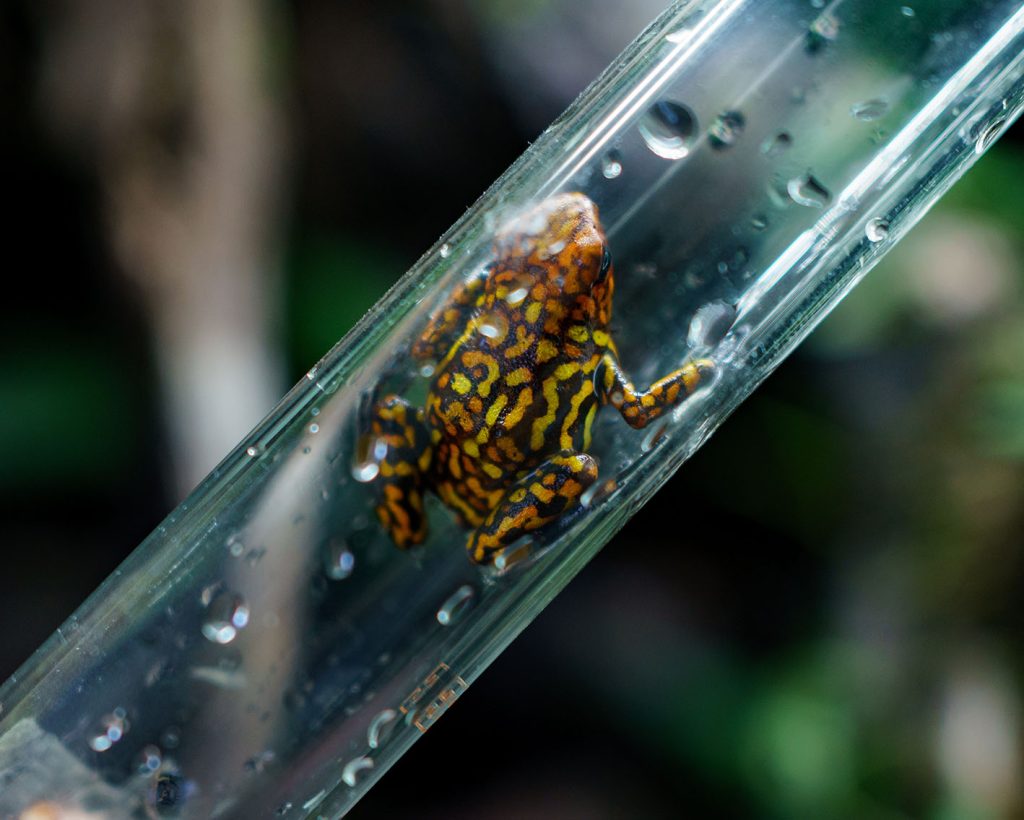
Understanding how dart frogs behave is the most important tip I can give you to catch them safely and easily. Most smaller frogs will tend to jump up and in front of themselves. By placing a test tube at a slight angle close in front of the frog they will usually jump right up into it. Additionally, if your frog is in a bromeliad axial it is very easy to catch them. Gently pull on the leaf and place the test tube in the pocket of the axial and the frog should just hop up into the tube.
If you reach down to grab a frog it will often spook them. By approaching from the side and try to cut off their escape routes, you can easily corner a frog. Many bolder species of frogs will be more willing to have you approach as they have very limited natural predators. In these cases, its often easy to corale the frog into a fruit fly cup without any quick movements or trouble. As with any pet its important to observe behavior and understand how they may respond in a certain situation to easily manage it.

Tools of the trade: What to use to catch dart frogs
There are a variety of tools that make catching and moving frogs much easier. I usually keep test tubes, fruit fly culture cups, and gloves readily available. Each tool has its own use and I know many hobbyists who prefer one over the other. I tend to use test tubes for smaller frogs and culture cups or just gloves for larger frogs. Whatever, tools you use be sure to be gentle with your frogs and clean them in between uses.
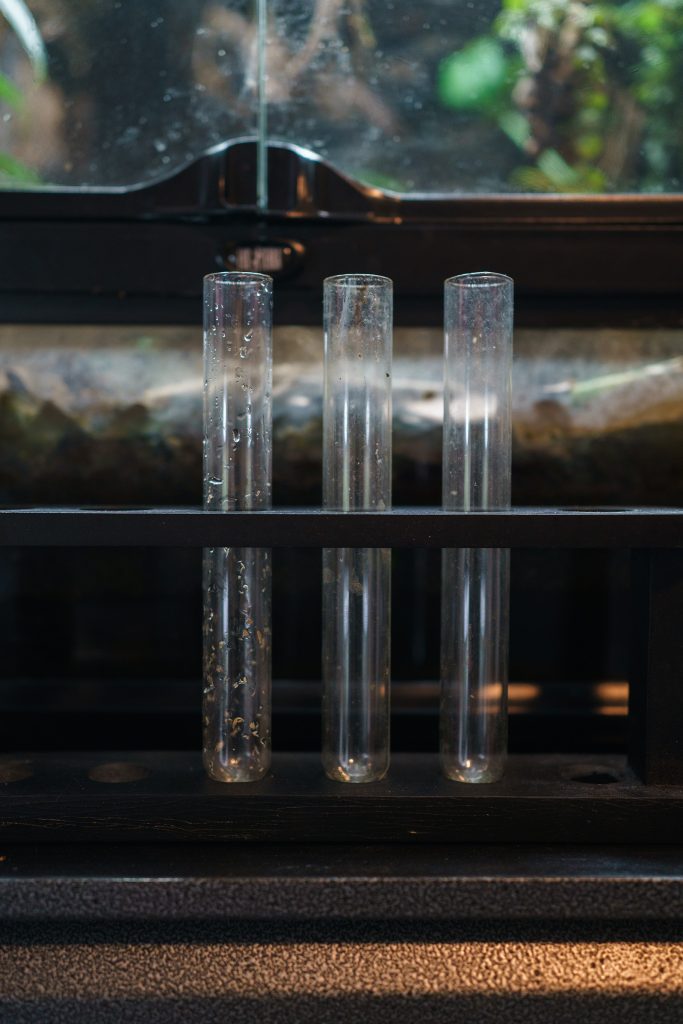
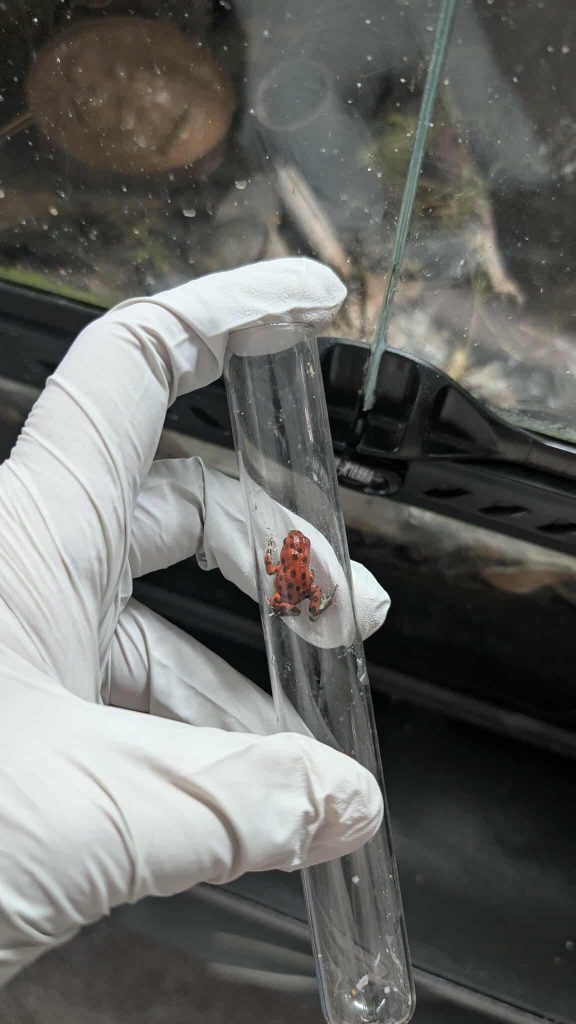
Test tubes used to catch smaller dart frogs. An Oophaga pumilio ‘Bastimentos’ froglet that was caught using a test tube.
How to catch dart frogs with test tubes
Test tubes are the best tools to catch smaller frogs like Oophaga pumilio, Ranitomeya, and froglets. They are generally easy to use just place the front of the test tube near the front of the frog and they should jump right in. It may take some practice but once you get the hang of it, catching frogs with test tubes becomes very easy. The only difficult part is getting the frogs out of the tubes.
I have collected a few different types of test tubes over the years and prefer larger ones. Longer test tubes allow you to get close to frogs without spooking them. Aside from length, the diameter of the test tube is an important factor to consider when selecting a test tube. Thinner ones are easier to put into bromeliad axials and corner smaller frogs. Test tubes with larger diameters are usually easier to get frogs out of and I usually go for larger test tubes so it is easier to get the frog out. Some hobbyists prefer centrifuge tubes these are larger and can also act as lay sites. I have yet to try out these however have heard great things about them.
In a pinch I’ve also used a turkey baster from the dollar store. By removing the bulb, you have a long tube to catch the frog. The opening is pretty large as well making it easier to grab the frogs and release them. A bonus to this DIY method is you can coax frogs to leave the tube by misting through the small hole.
Check out some frog catching supplies:
- Centrifuge Tubes (50 mL)
- Test Tubes (20 mL)
- Nitrile Gloves (100)
How to get frogs out of test tubes and culture cups
After catching your frog in a cup or with a test tube they usually will not hop right out. For larger containers, you can easily tap on the side or invert it and the frog will fall right out. If transferring frogs between vivariums, the least stressful way to release a frog is just to leave the cup or test tube in the vivarium and let the frog jump out on its own.
To get your frog out of a test tube you may have to shake the test tube rapidly side to side or in one swift movement up and down almost as if you are tapping the tube on a surface. Usually this will get the frog out quickly, however, it may be more stressful to the frog. Picking a bigger sized test tube usually makes this easier as the frog cannot cling to both sides. Whenever possible I prefer to allow the frog to enter and leave a receptacle with little stress.
Catching frogs with 32 oz culture cups
This is probably the best tool to catch bigger frogs like Phyllobates terribilis and some large obligates. Its readily available and easy to use to corral frogs, however, its difficult to fit in smaller vivarium. You can usually just put the cup in front of the frog and they will jump into it or you can use a lid or hand to gently guide them into the cup.
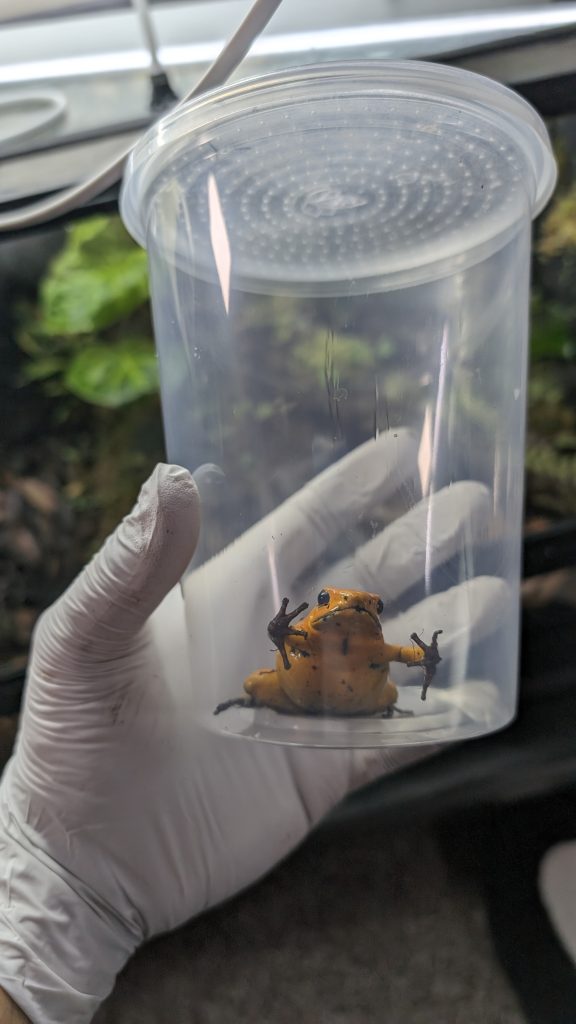
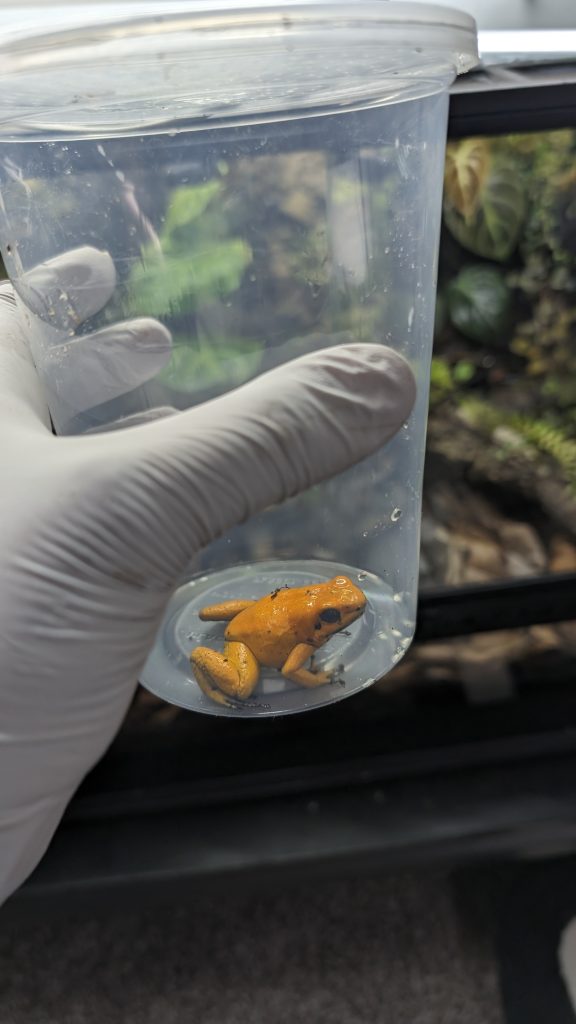
I often use fruit fly culture cups (32oz plastic containers) to catch dart frogs especially larger ones like these Phyllobates Terribilis.
How to handle dart frogs
Dart frogs have incredible permeable skin, meaning that any oils on your hands can be easily absorbed and cause the frogs harm. Before working in my vivariums I always try to wash my hands first. Also, if I am catching frogs I wear some nitrile gloves even when using tools. This way if I do have to grab a frog there is no concern.
It sometimes necessary to handle your frogs by hand especially when administering certain topical medications such. When catching a frog by hand you should gently cup the frog. You should leave it some space, while not allowing it to slip out of your fingers. In situations where you must restrain the frog to medicate it, you can gently grasp its back legs between your fingers. Additionally, you may invert the frog which puts the frog in a trance like state momentarily. Restraining a dart frog is stressful for the frog and can be detrimental to a sick frog, so proceed with caution.
Generally, handling dart frogs directly should generally be avoided as it is stressful for the frogs and can cause more harm than good. However, using gloves and catching your frogs by hand is often easier especially for a trained hobbyist and can be less stressful if done quickly and gently.
How to catch an escaped dart frog
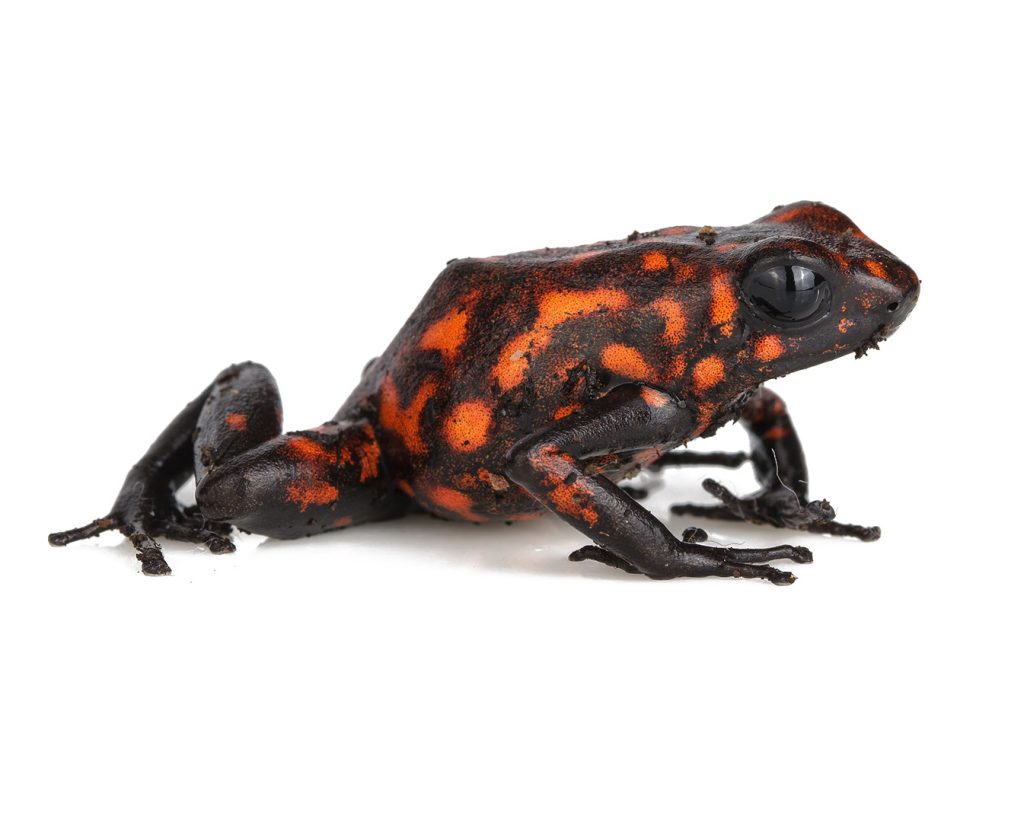
It is inevitable that a frog will one day jump out of your vivarium and attempt to escape, ultimately you must catch the frog as soon as possible even if it means using your bare hands. Species like Ranitomeya and some Oophaga are known for being flighty and jumping right out of a vivarium. One way of managing these escapes is making sure there is not heavy plant coverage near the door so you know frogs are not near before opening the vivarium. Additionally I try to cover gaps under my frog racks so the frog cannot escape somewhere where I cannot reach them.
In an event of an escape its important to catch the frog as soon as possible. In these cases, I would just grab them with my hand since looking for a cup may take too long. Once you capture your frog be sure to mist them with water before returning them to their vivarium.
Catching and handling dart frogs is an essential skill for hobbyists
Catching dart frogs safely is an important skill to learn. Even if you only have a couple vivariums and do not transfer frogs often there will be a time when you need to move your frog to bring it to the vet or potentially separate frogs. Luckily these frogs are easy to move with test tubes, plastic cups, or even with gloves if necessary. Although, dart frogs are resilient and can often deal with the stress of moving around and being transported, it is important to be careful and safe when handling or moving these amphibians.
Disclaimer: Some of the Amazon links on this page are affiliate links. I will receive a commission if you purchase something through these affiliate links.


